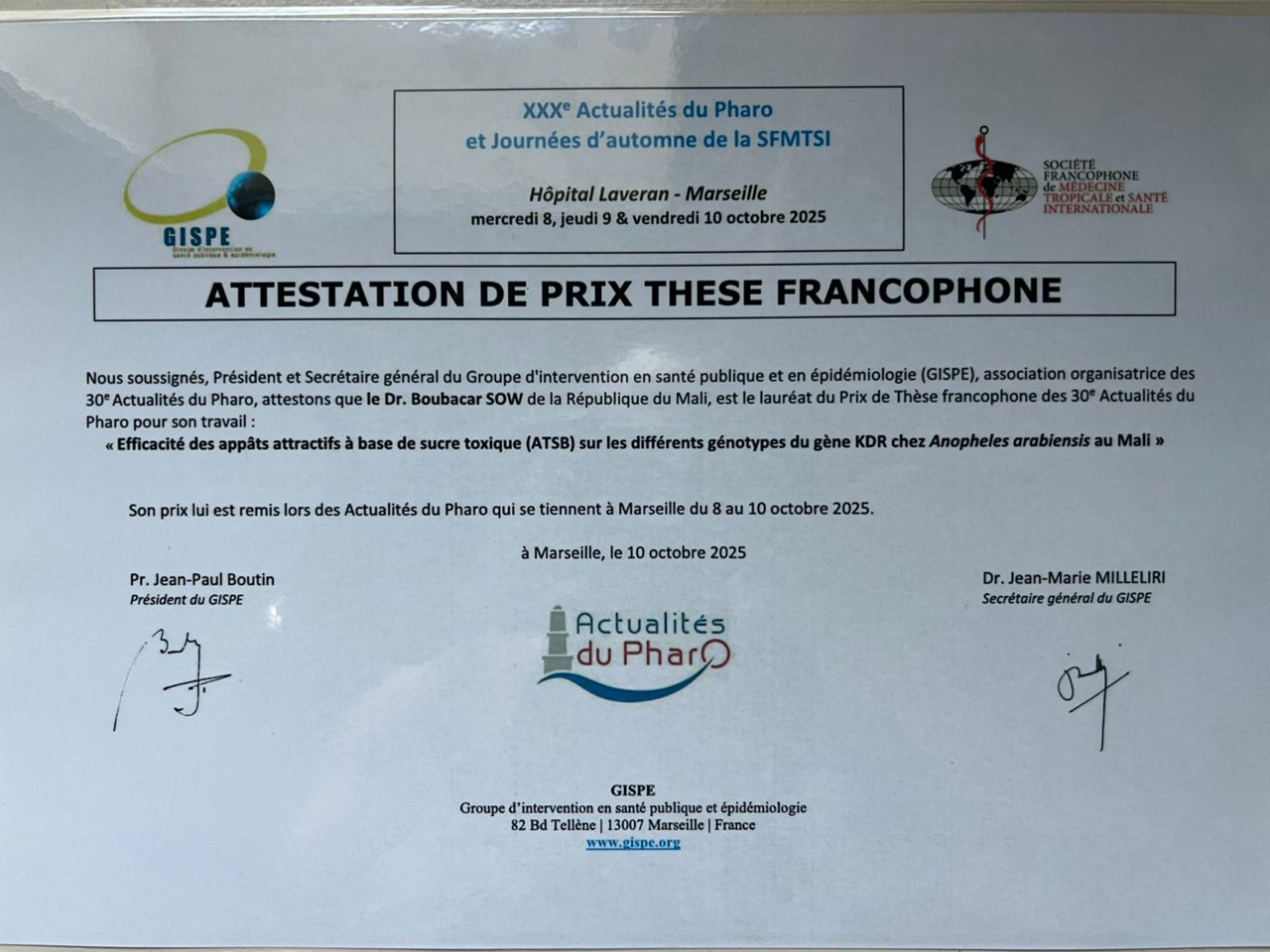
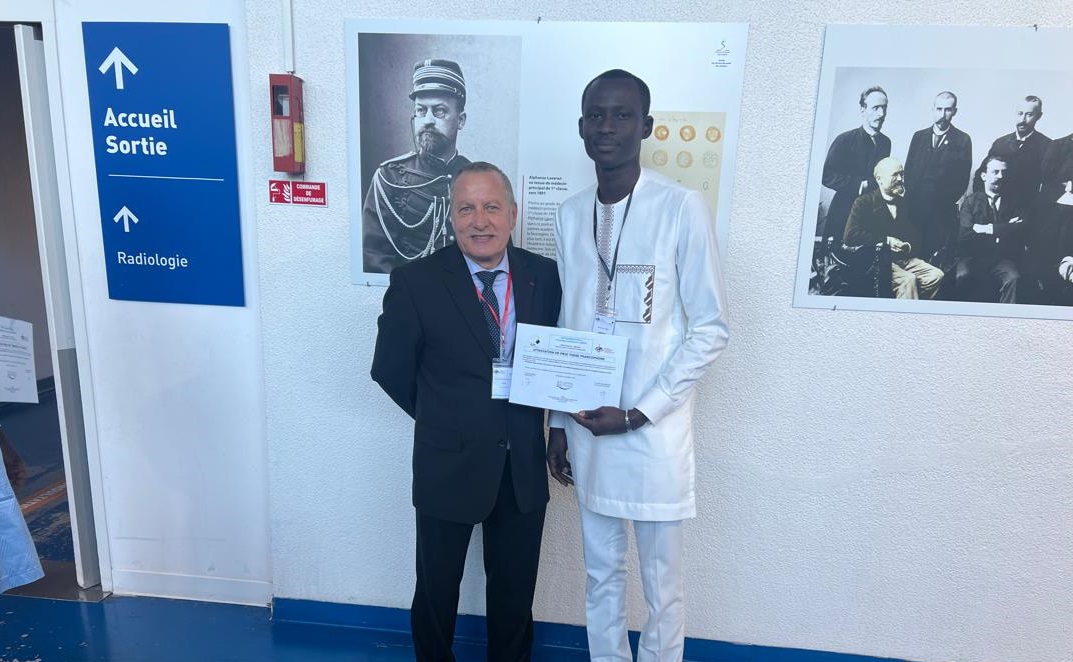
The topic entitled: ” Effectiveness of Attractive Targeted Sugar Baits (ATSB) on different genotypes of the KDR gene in Anopheles arabiensis in Mali,” defended by Dr. Boubacar SOW in 2024, won the 2025 Pharo Prize, awarded to the best thesis (medicine, pharmacy) from French-speaking universities.
This thesis, proposed and supervised by Dr. Amadou Sékou TRAORE, was conducted at the University Clinical Research Center (UCRC) under the guidance of Professor Mahamadou DIAKITÉ, Professor of Immunogenetics and current Rector of the University of Sciences, Techniques, and Technologies of Bamako (USTTB).
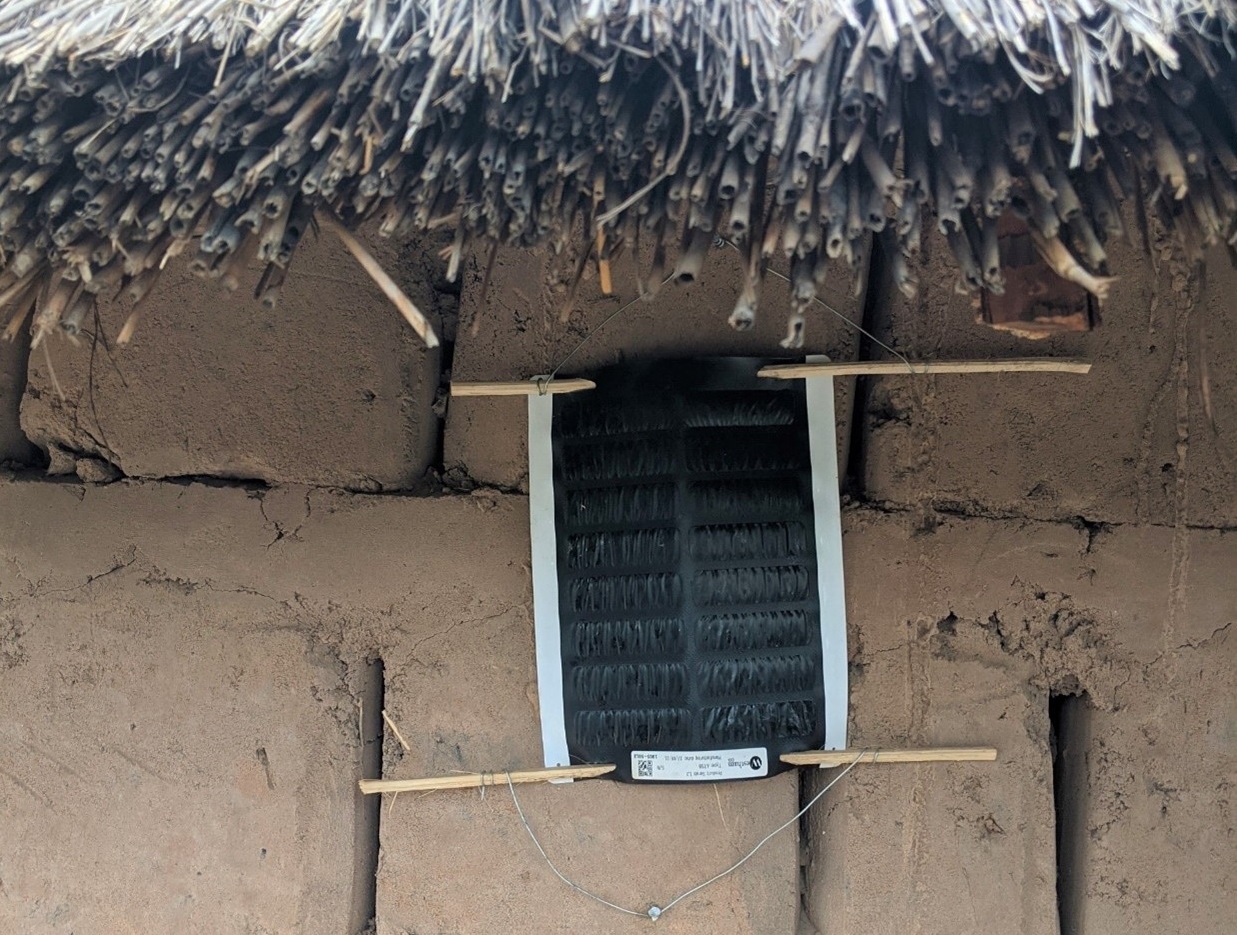
The WHO‘s call for the development of new vector control strategies and tools to complement and/or reinforce existing ones has led to the conception of ATSB. These traps contain juice from several fruits in artificial cells. Mixed with sugar, the juice attracts adult mosquitoes seeking a sweet meal, then kills them after they ingest the sugar solution containing a toxin.
The effectiveness of this anti-vector solution (against mosquitoes, etc.), which must be hung outside the house or on a tree, was the subject of a multicenter study as part of a project of the Innovative Vector Control Consortium (IVCC) conducted in three countries, including Mali. In Mali, the trial, which yielded conclusive results, was conducted in 86 villages in the Koulikoro region.
“In these villages, we took ecological factors into account, as some villages are located on the riverbank, while others are at high altitude, surrounded by vegetation… This study was not limited to vectors, but also looked at the populations that were monitored before and after the traps were set up…,” said Dr. Amadou Sékou TRAORE, medical entomologist.
Indeed, the deployment of this technology (trap) on a larger scale could contribute effectively to the malaria prevention, which is currently a major public health concern, with more than 75% of cases occurring during periods of high transmission. It will thus minimize the associated financial burden.