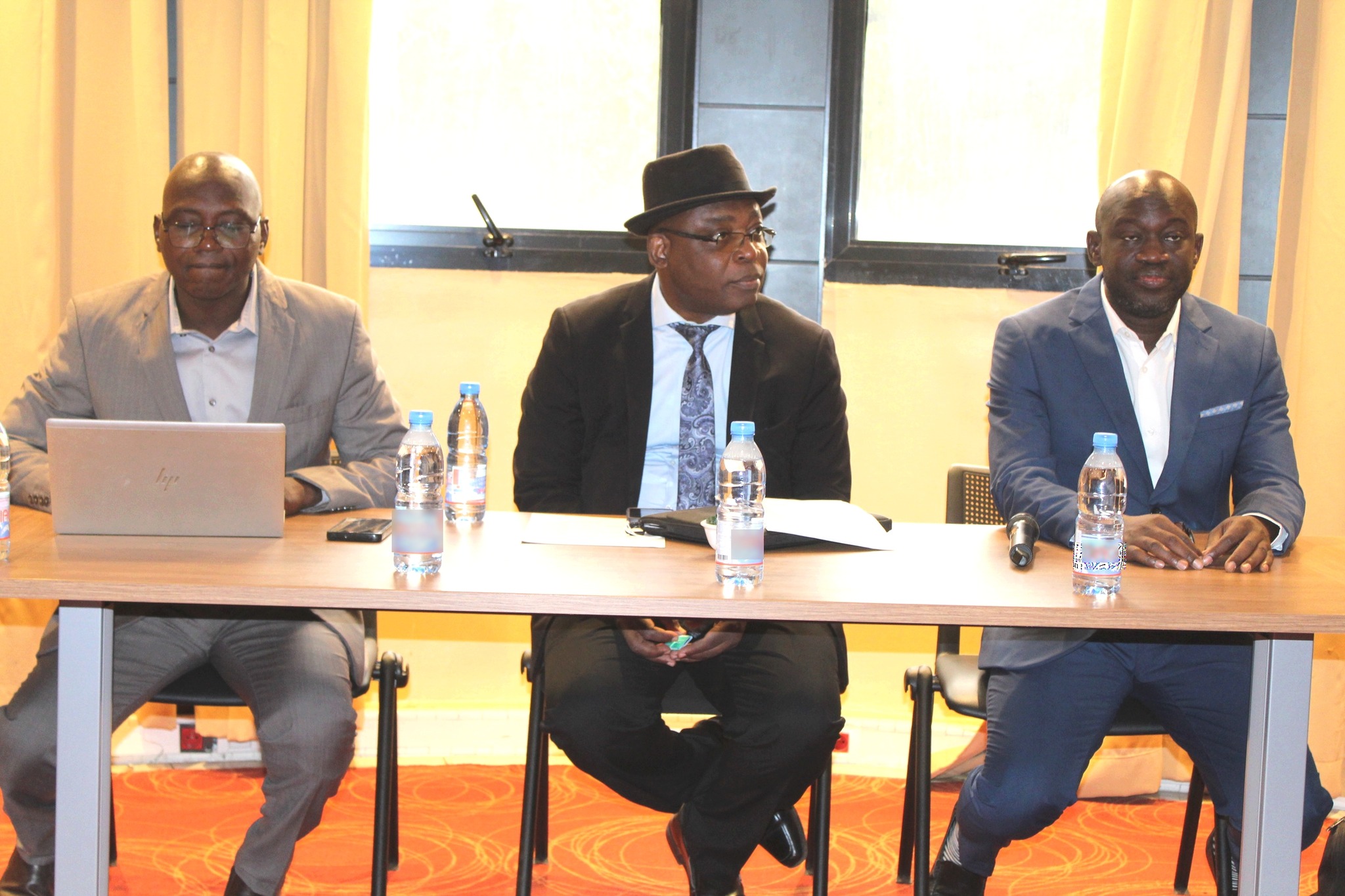
The University of Sciences, Techniques and Technologies of Bamako (USTTB), through its University Clinical Research Center (UCRC), organized a training workshop from December 1st to 3rd , 2025, in Bamako, to strengthen implementation capacities for “One Health” strategies. This hybrid scientific activity brought together about 30 participants, including doctors, pharmacists, environmentalists, veterinarians, biologists, researchers… from Mali and Guinea Conakry. FR-VIDEO HERE
According to Professor Seydou DOUMBIA, Director of the UCRC and head of the program, this workshop is part of the “Mali-Guinea Training Program on Emerging Infectious Diseases Research (Mali-Guinea EID-RTP)” (5 D43 TW011818-02) funded by the National Institutes of Health of the United States of America (NIH/NIAID).
“Its objective was to strengthen the capacities of Malian and Guinean professionals and academics on the principles and application of the ‘One Health’ approach for better health security and sustainable development,” he said.
Why the “One Health” approach?
Today, 60 to 75% of emerging infectious diseases in humans are of animal origin (zoonotic), including HIV/AIDS, Ebola, avian flu, and COVID-19. In addition, In addition, the inappropriate use of antibiotics in the treatment of humans, animals, and in agriculture contributes to the development of resistant bacteria that can spread into the environment.
According to epidemiologists, this phenomenon promotes antimicrobial resistance, making infections more difficult, even impossible, to treat, leading to millions of deaths. In order to overcome these health issues, the interdependence of human, animal, and environmental health is increasingly recognized as essential.
According to Dr. Souleymane DIARRA, Head of Emergency Operations at the National Institute of Public Health (INSP), this workshop is welcome, as it strengthens collaboration between the human, animal, and environmental sectors to prevent and manage health crises (zoonoses, pandemics) by developing skills for surveillance, rapid response, and education, and by integrating concrete actions such as early warning systems for emerging threats.
“These training sessions are essential for building effective strategies to deal with today’s complex health challenges, transforming the ‘One Health’ concept into concrete actions in the field for public health,” said Dr. DIARRA.
Dr. Zakaria KEITA, Epidemiologist/Research Coordinator at UCRC: “This three-day workshop was based on an interactive and collaborative methodology combining presentations, case studies, panel discussions…. The program is structured to move from fundamental concepts to implementation.”
One Health is an integrated and unifying approach that aims to balance and sustainably optimize the health of people, animals, and ecosystems. It recognizes that the health of these three areas is closely linked and interdependent. PICTURES.
UCRC Communication Office
- Join us on YOUTUBE
- Join us on LINKEDIN
- Join us on X-PAGE