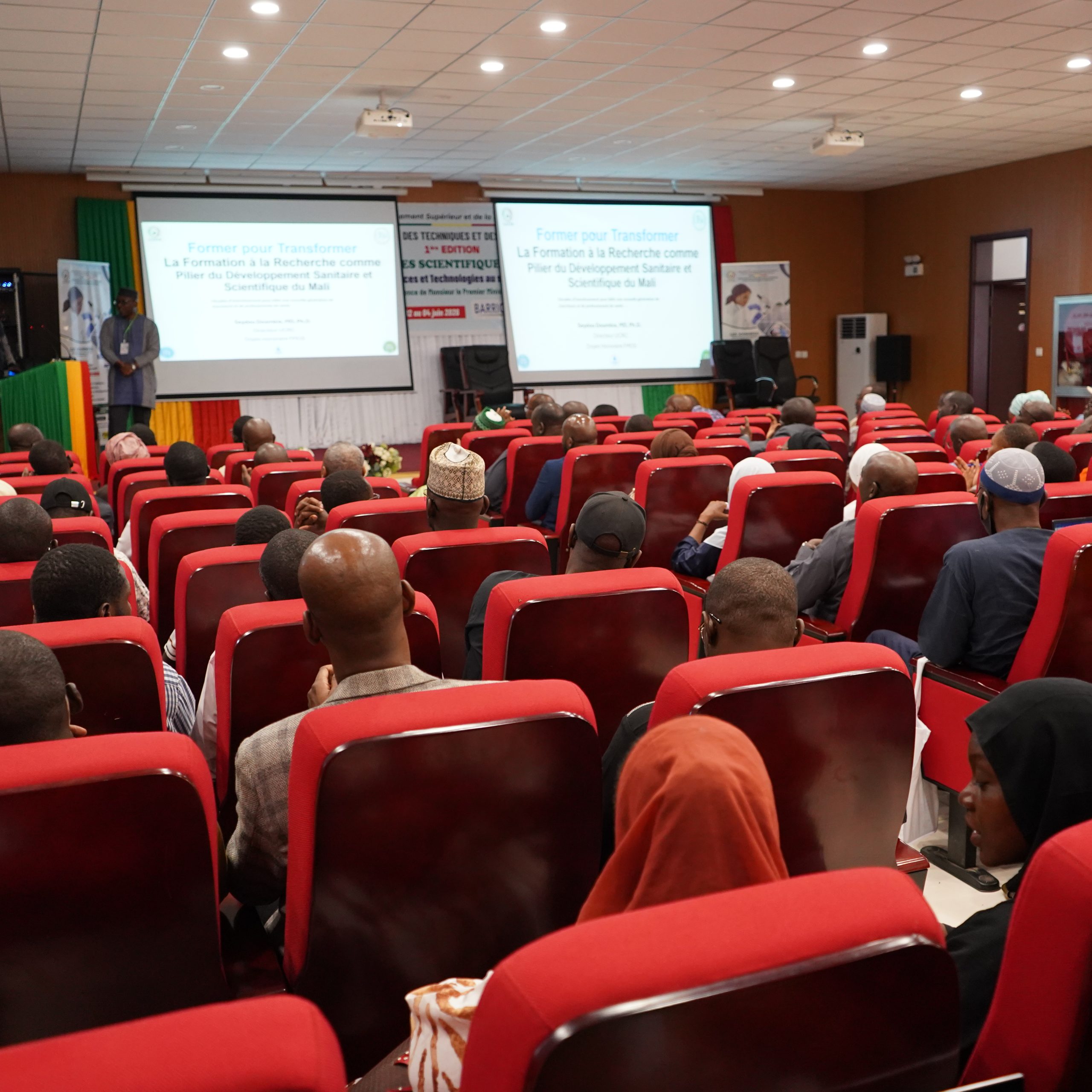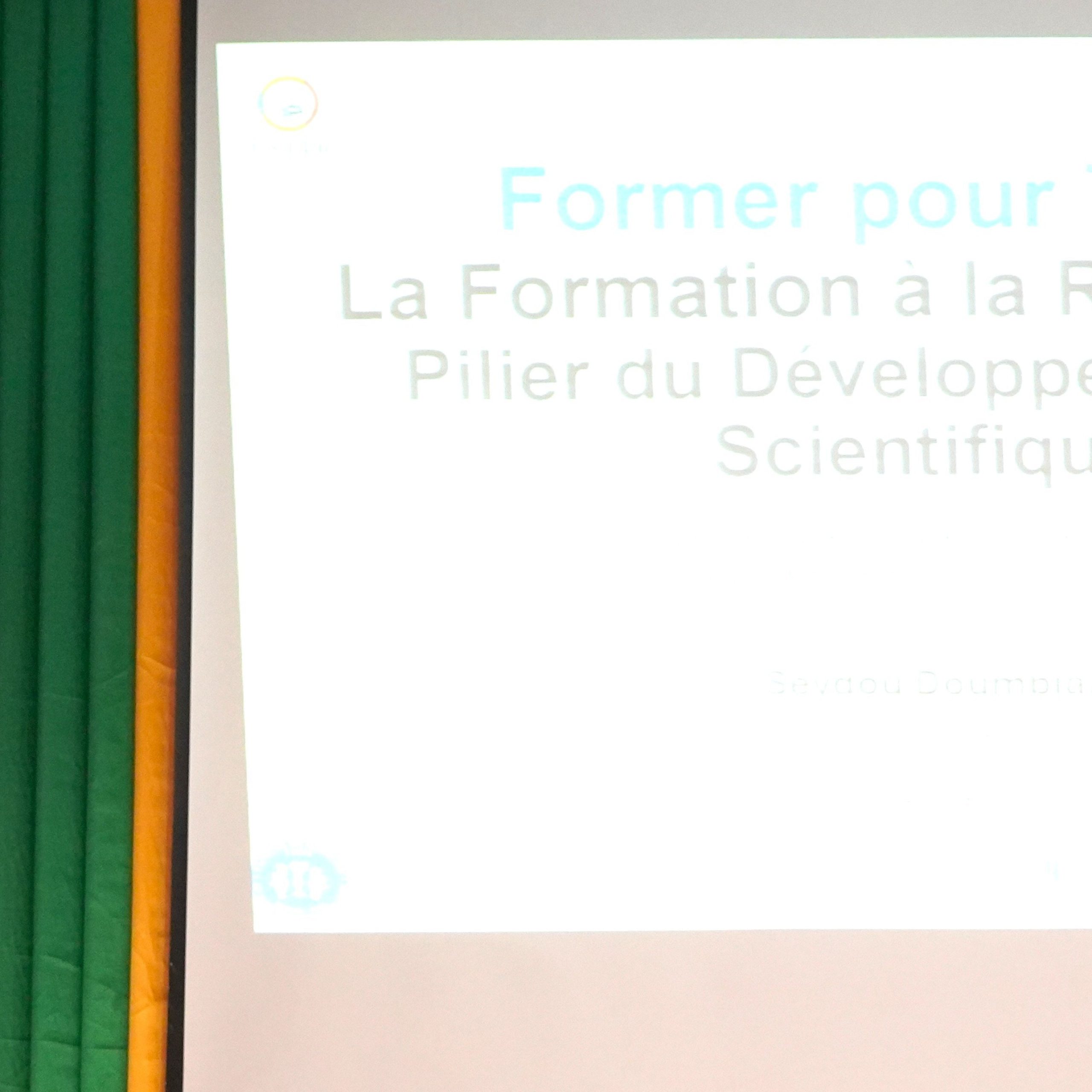
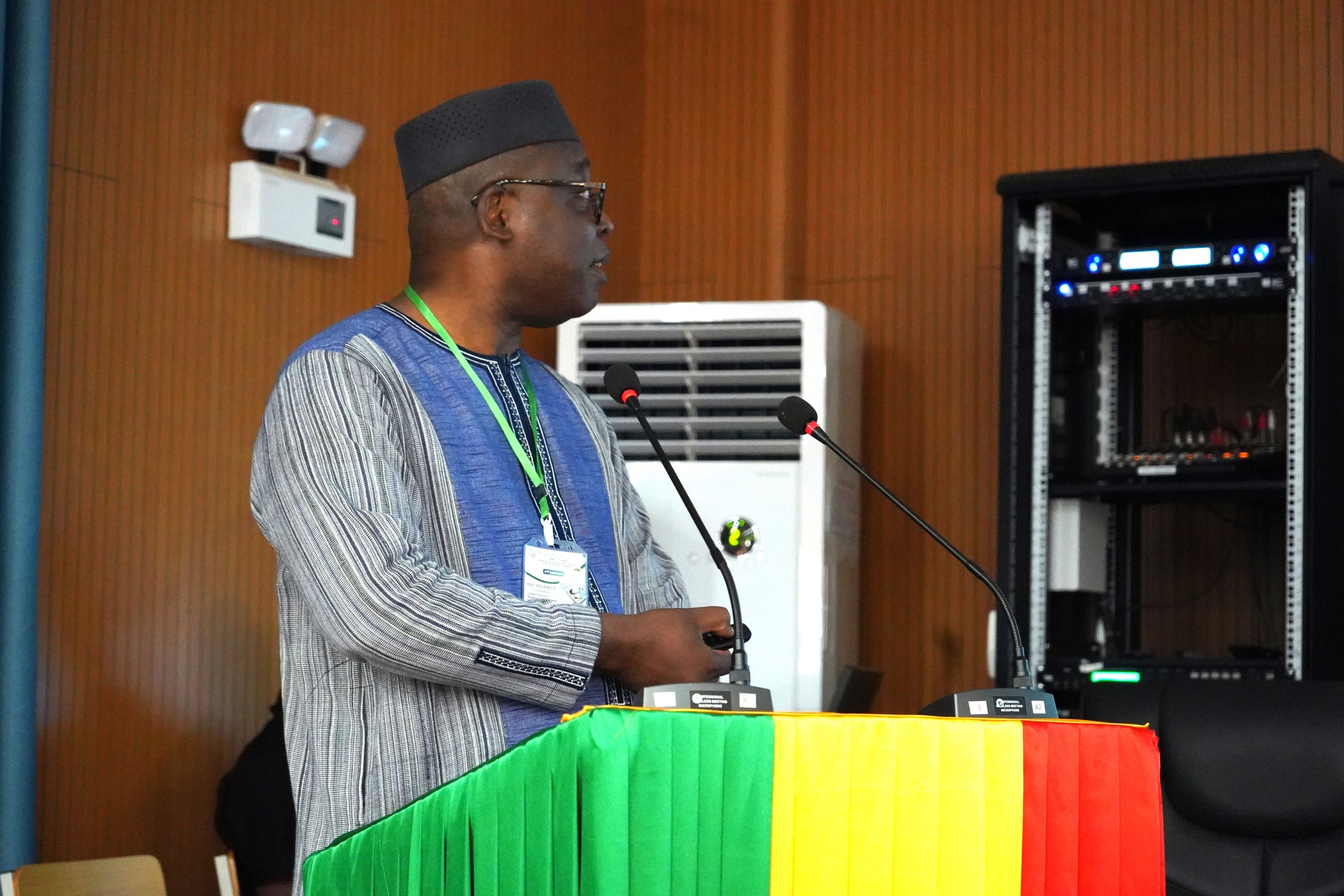
During the second day of the first edition of the Scientific Days of the University of Sciences, Techniques and Technologies of Bamako (USTTB), Professor Seydou Doumbia, Director of the Clinical Research University Center (UCRC), led a high-level panel. His presentation was titled: “Training to Transform: Research Training as a Pillar of Mali’s Health and Scientific Development.” This panel reviewed two decades of investment in biomedical research and public health while outlining future prospects. This success relies on a collective dynamic involving the university’s faculties, research centers, hospitals, and strategic partners.
A Triple Strategic Impact
Professor Doumbia highlighted the triple impact of research training in consolidating the health system:
- Health Development: Shaping critical minds capable of producing local and sovereign data.
- Scientific Development: Strengthening national leadership through the emergence of new specialties, local innovation, and the opening of cutting-edge laboratories.
- Socio-economic Development: Creating value through highly skilled jobs and structuring forward-looking sectors.
The Growth of USTTB Academic Programs
Over the past decade, USTTB has significantly diversified its academic offerings through University Diplomas (DU), Master’s degrees, Doctorates, and Postdocs. The programs cover highly specialized fields: public health, bioinformatics, biosafety, medical biology, anatomy, as well as genetics and molecular pathology focused on antimicrobial resistance (AMR).
The Master’s in Public Health, specializing in Implementation Research, stands out as a model of collaboration between WHO/TDR and USTTB. This research is critical: while malaria control tools (ITNs, SMC, IPTp) have proven their effectiveness in combination, challenges persist. For instance, mosquito bites are increasingly occurring outdoors, which bypasses the efficacy of bed nets and requires adapted local solutions.
Concrete Successes and International Partnerships
Among the major achievements, the researcher praised the strengthening of technological platforms, the expansion of partnership networks, and the emergence of a new generation of scientific leaders. Two programs of excellence illustrate this dynamic:
- US-Mali RETP (2020-2025): Dedicated to research ethics, this program has trained 21 Master’s graduates, strengthened the capacity of over 150 ethics committee members, and awarded 10 professional development fellowships in the USA for Malian educators. Building on this success, it has been regionalized under the label US-FA RETP (Francophone Africa).
- Mali-Guinea EID-RTP (2022-2027): Focused on emerging infectious diseases, this project funds the training of 6 PhD students, 15 Master of Science students, 125 short-term certifications, and 15 capacity-building fellowships for faculty.
These successes capitalize on prestigious institutional collaborations, including George Washington University, the CVD (Baltimore and Mali), INSERM, the London School of Hygiene and Tropical Medicine, the University of Liverpool, and the National Institute of Public Health (INSP) of Mali.
UCRC Communication Office
- Join us on YOUTUBE
- Join us on LINKEDIN
- Join us on X-PAGE