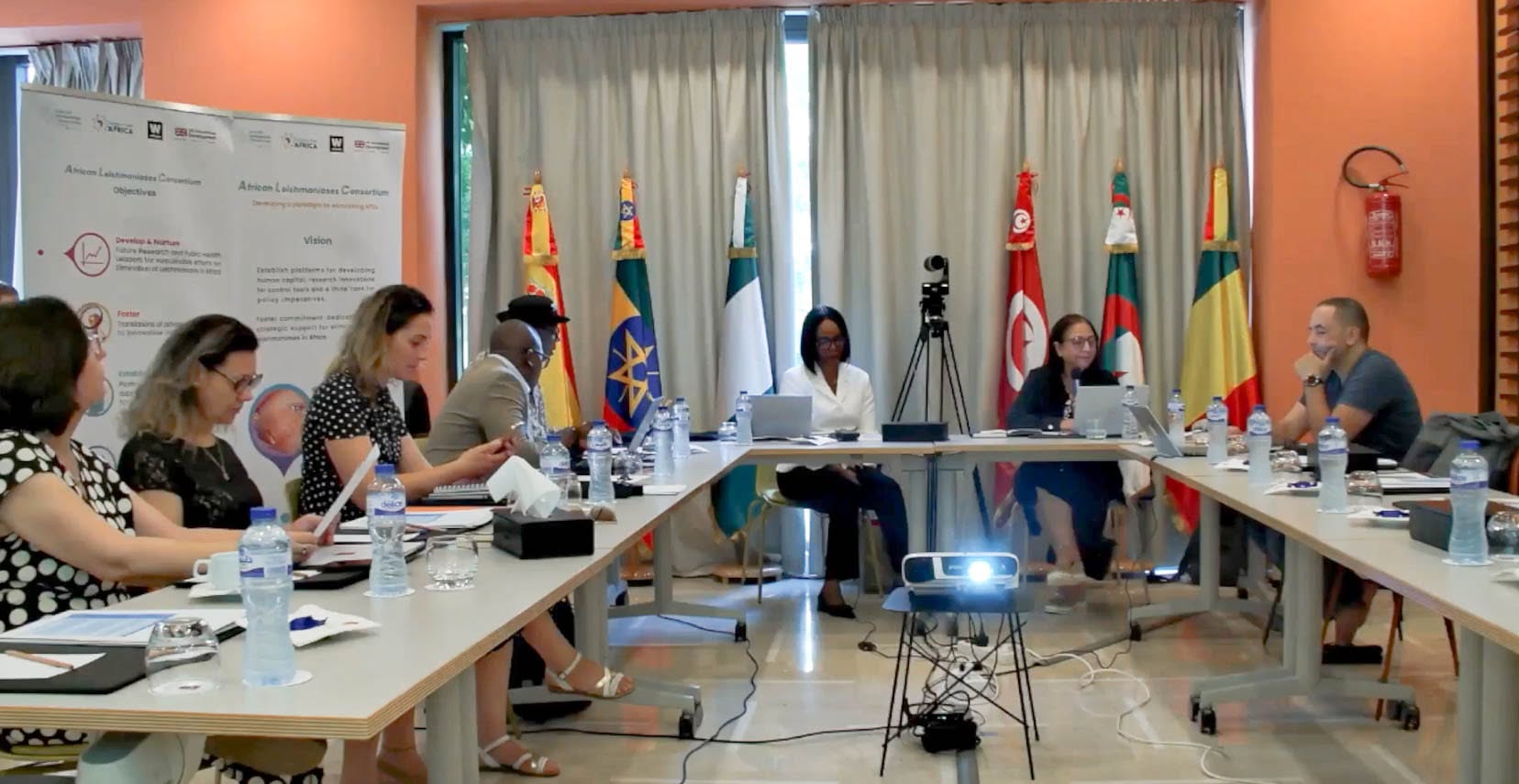
Researchers from member countries and partners of the African Leishmaniasis Consortium (ALC) have been gathered since Monday, July 27, 2026, in Tunis for a high-level meeting. This meeting brings together representatives from member research institutions, including the University Clinical Research Center (UCRC).
The Tunis workshop aims to: Evaluate progress and professional achievements, define the consortium’s strategic priorities for the coming years, and build a sustainable research ecosystem linking science to public health policies.
Key Discussion Points
Discussions focused on three major pillars:
- Assessment and Follow-up: Evaluating the implementation of collaborative research projects;
- Capacity Building: Identifying resources and support needed to optimize the execution of research networks;
- Second ALC Cohort: Defining the strategic direction focused on mentoring, innovation, and creating a pool of young researchers.
The ALC is a research and control network for neglected tropical diseases. Funded by the Science for Africa Foundation through the DELTAS Africa II program, it unites leading institutions from five African countries and Spain: Tunisia, Algeria, Ethiopia, Nigeria, Mali (represented by the UCRC of the USTTB), and Spain.
The consortium pursues four key missions:
Improving early diagnostic tools, finding safer and more effective treatments, strengthening local scientific skills in Africa, and coordinating a cross-border approach to eliminate the disease.
What is Leishmaniasis?
Leishmaniasis is a parasitic disease transmitted from animals (primarily dogs) to humans through the bite of an insect called a sandfly. Its consequences vary depending on the form of the disease: irreversible skin scars (cutaneous form), destruction of ENT mucous membranes (mucocutaneous form), or fatal damage to internal organs such as the liver and spleen (visceral form).
By joining forces, ALC members reaffirm their commitment to transforming research into concrete and sustainable solutions for the health of African populations.
UCRC Communication Office
- Join us on YOUTUBE
- Join us on LINKEDIN
- Join us on X-PAGE